Furnishing a vacation rental: buy new or secondhand?
Should you furnish your vacation rental new or secondhand? What 41 hosts reported, which items handle secondhand well, and where used items cost you later.
By Equipe Anfitrione

Part of the guide: Vacation Rental Host Guide: From Listing to Scale
Every new host hears both pieces of advice, usually in the same week. One says not to spend much, because it is just a vacation rental and guests won't notice. The other says to buy everything new, because guests notice everything and reviews will show it. Both come from people who actually host, and that is what makes the decision so hard.
A public discussion among Brazilian hosts on this topic gathered accounts from 41 hosts describing how they furnished their own places. The result takes the argument apart: almost no one picks a side. And the criterion they mention most is not the type of furniture. It is the condition the piece is in.
This article has no prices, and it is worth saying that up front: none of the replies mention amounts, so any number here would be made up. Monthly running costs are covered in how much it costs to run an Airbnb, and the big picture for beginners is in the complete host guide. The question here is a different one: given that you already know what you need to buy, what is worth buying new?
Key takeaways
- 26 of the 41 hosts in the sample combine new and secondhand furniture in the same property.
- Condition is the criterion cited most often by hosts who state a rule, slightly ahead of item type.
- The three checks from Anfitrione: electrical safety, structural strength and hygiene before choosing new or secondhand.
- Secondhand costs you later, when a piece fails mid-stay or when the pieces don't work together.
Is it worth furnishing a vacation rental secondhand?
Yes, and it is what most of these hosts do. Secondhand furniture is any pre-owned piece, whether it comes from a thrift store, an online marketplace or a family clear-out, and it fits well in much of a vacation rental. The caveat is not about age, it is about function: anything that can fail while a guest is staying deserves a new piece.
What these accounts show is a decision far less ideological than the debate suggests. A clear majority of the sample combines both sources in the same property, without guilt or speeches. A smaller group furnished with new pieces only, and the few who explain why give circumstantial reasons: a newly built house, a new building, or an older apartment being modernized bit by bit with booking income. One of them makes a point of saying they have nothing against secondhand furniture. An even smaller group furnishes almost everything secondhand, out of taste or budget. And some flip the rule that seems obvious, furnishing the whole home with new pieces and handling only the kitchen with secondhand items.
None of these groups reports widespread regret. When regret does show up, it almost always comes from one specific piece that broke. Only one host generalizes from their own case, after a bed gave way during a stay, and swears never to buy anything secondhand again. That difference changes the question you need to answer: it is not secondhand or new, it is which piece.
What 41 hosts said about new and secondhand
The material is a set of public posts by hosts, so what it contains is self-reported, not audited. The count is ours: 106 messages, 48 of them from the person running the discussion, which leaves 58 posts written by 41 different hosts. Hosts who said they received the property already furnished were counted as not stated. It is a small, self-selected qualitative sample: it gives a rough sense of proportion, not statistics for Airbnb or any other platform, and it does not represent hosts in general.
Get the next guides before anyone else
Practical Airbnb management and automation tips, no fluff. One email when new content drops. Unsubscribe anytime.
The detail that changes the reading is in the criterion, not the proportion. When a host explains their own rule, the most repeated wording does not mention any type of furniture. Condition is the criterion that accepts any piece, new or used, as long as it is intact and works. The phrases repeat almost word for word among people who never talked to each other: as long as it is intact, as long as it is well kept, secondhand but functional, in great condition. The margin is tight, and it is worth saying so: counting only those who state a rule, condition comes up with six hosts and item type with five.
The rule by item type exists, but it is the minority. It appears when someone separates what plugs in from what doesn't, or saves new purchases for the kitchen. And there is the reversed version: one host bought all the furniture new and handled only the kitchen items secondhand. Another host buys older furniture on principle, believing older joinery is better made than today's.
| Stated criterion | How it shows up in the replies |
|---|---|
| Condition | “As long as it's intact”, “in great condition” |
| Item type | New electrics, secondhand furniture |
| Reversed item type | New furniture, secondhand kitchen items |
| No criterion | Just a list of what they bought |
What should you buy new without thinking twice?
This is our own synthesis, and it really is ours: no host states this rule. It comes from cross-checking the accounts against the kind of problem each category causes. The three tests are the three questions that settle most buying doubts: does the piece plug in, hold a person's weight or touch skin?
Anything that plugs in calls for a new piece for two reasons, and only one of them is the risk of breaking down. One host explains buying every appliance new, in the budget range, because older models use more energy. In other words, the reason they give is the electricity bill, not breakdowns. The second reason is supply: another host says they try to buy used appliances in good condition and can't always find them. That market is thin, and the good pieces go fast. Add what the platform expects: Airbnb's safety requirements for accommodations ask hosts to address known hazards, and they specifically mention electrical problems and poorly maintained appliances. A fridge bought from a stranger comes with no maintenance history, and the host takes on that whole past with no way to inspect it.
Holding weight is the structure test: beds, bunk beds, tall shelving, a sofa in daily use. Touching skin is the hygiene test: mattresses, pillows and upholstery in close contact with the body. Bed linens have their own rules, on thread count and replacement cycles, covered in vacation rental linens. Here the topic is only what sits underneath them.
| The test | What it covers | Why consider new |
|---|---|---|
| Plugs in | Fridge, stove, microwave | Energy use and electrical risk |
| Holds weight | Bed, bunk bed, tall shelving | Fails with a guest on it |
| Touches skin | Mattress, pillow, upholstery | Hygiene and hidden wear |
Where does secondhand furniture really pay off?
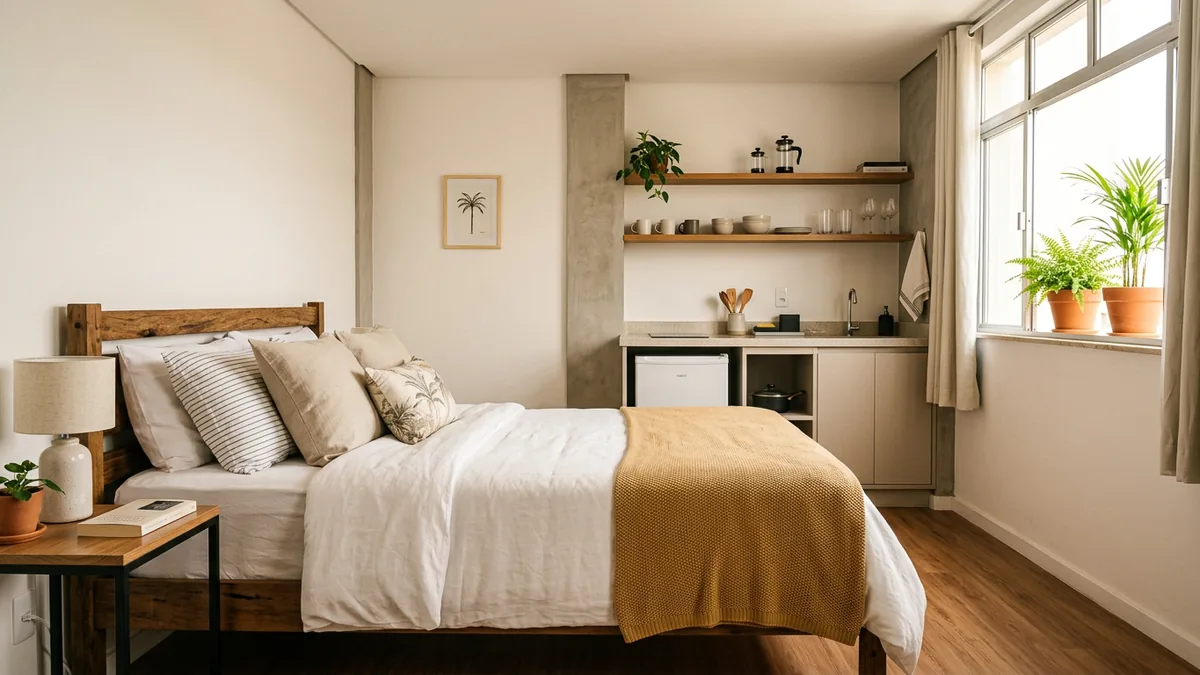
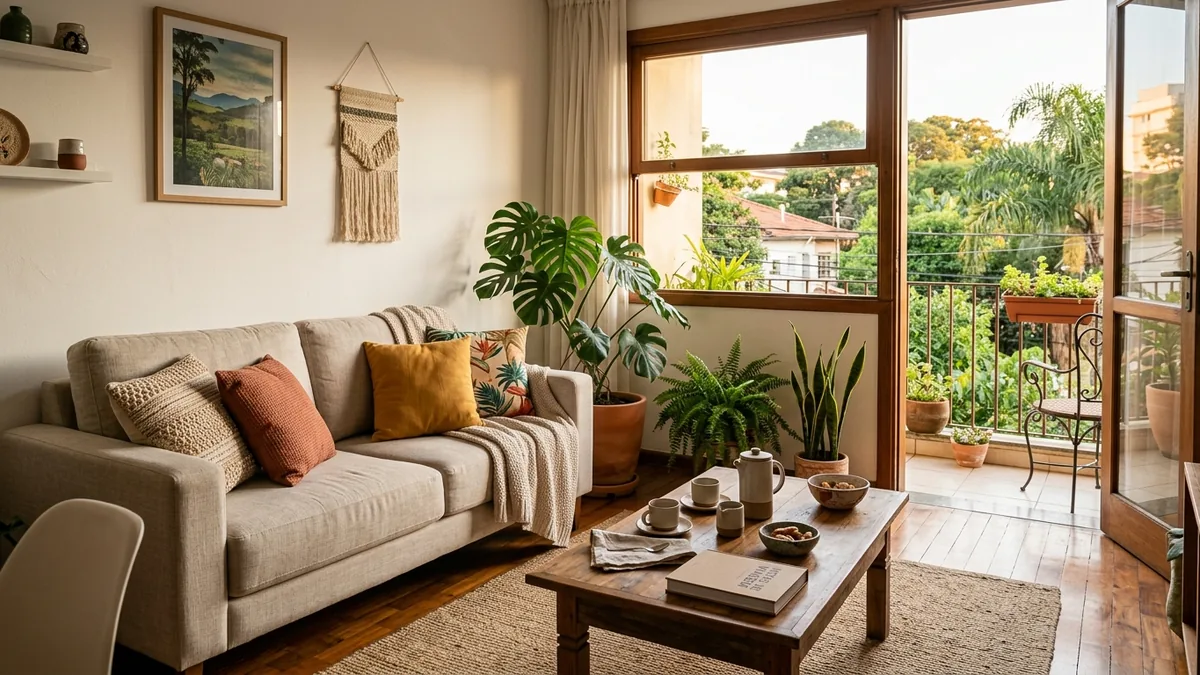
Start with decorative pieces and sound solid wood: side tables, low shelving, and artwork. Armchairs, rugs, and lamps can also work secondhand, but upholstery must be cleanable or replaceable, frames sound, and electrical parts safe. It is also where secondhand delivers what new rarely does on a tight budget: personality. A living room furnished only with store-bought pieces tends to look like a showroom, and secondhand pieces break that effect without blowing the budget.
The sources hosts cite come up again and again: online classifieds marketplaces, thrift and secondhand furniture stores, family clear-outs, reclaimed pallets. One host says they find brand-name pieces at accessible prices through these channels, and adds the caveat almost everyone forgets: you have to hunt for them. It is worth noting that hunting doesn't only cost time. Delivery for large items, assembly, new upholstery and restoration all go into the math before you compare with the price of a new piece. A cheap armchair that needs a full makeover can end up costing more than its store equivalent, and the difference is that the store one arrives ready to use. An honest tally of a secondhand find adds the asking price, transport, repairs and the hours spent searching, and only then compares it with the price tag.
| Category | New or secondhand | Why |
|---|---|---|
| Appliances | New | Energy use, risk and thin supply |
| Mattresses and pillows | New | Hygiene and wear |
| Beds and frames | Secondhand, inspected | Fails with weight on it |
| Sofas and armchairs | Secondhand, if sturdy | Fabric can be replaced |
| Tables, shelving, wood | Secondhand | Outlasts cheap new pieces |
| Decor and rugs | Secondhand | Where personality shows |
What is the hidden cost of secondhand?
There are two costs, and neither shows up on the price tag. The first is a failure while a guest is staying. One host reports that a secondhand bunk bed broke during a stay. They make a point of noting that the bed was properly assembled. They offered a spare bed, the guest declined, and the bottom bunk broke too. The host replaced it with new single beds, changing the format and not just the age of the furniture, and concluded they would never buy anything secondhand again.
That conclusion is theirs, and the rest of the accounts don't back it up: a bunk bed is a high-load item that breaks when new as well, and no other host in the discussion reported a similar failure. It is one person's story about one piece, not a failure rate. What the case does show well is something else. When a piece fails during a stay, you are no longer choosing between new and secondhand. You are solving a problem with a guest right in front of you.
Here is the part the accounts leave out and the buyer needs to think through: an item bought from a private seller may come with no receipt and little or no warranty or repair coverage. Before buying, ask for proof of purchase, check whether any manufacturer warranty remains and under what conditions, and look up the consumer rights that apply where you are buying. Whatever isn't covered is, quite literally, yours to pay for when the item fails. Add what the platform expects: what Airbnb expects from hosts includes describing the listing accurately and providing a clean, safe place. An item that breaks mid-stay runs up against both.
The second cost is visual, and it is the most underestimated. Thrift stores work well, but the risk is that the room turns into a patchwork, with each piece pulling toward a different style. The effect weighs more in small spaces, where everything appears in the same photo. One host sums up the two extremes: furnishing everything with modern store pieces produces the catalog home, and furnishing everything with old pieces produces grandma's house. Neither is a mistake, but both need to be a deliberate choice.
In practice, this is where furnishing meets guest communication. A piece that stops working at 11 p.m. becomes a guest message right away. If your guests reach you on WhatsApp, Anfitrione can answer those messages for you while you sleep, so the issue is already being handled when you wake up instead of getting lost overnight.
How to furnish in waves without draining your cash
Buying gradually, with income from the first bookings, comes up in three of these accounts, and it is not an emergency fix. The wave approach below is our own recommendation, designed to separate what you need before you can list on any channel from what only improves the experience.
A buying wave is a batch of items bought together under a single criterion, instead of an endless list bought on impulse. The first wave exists so the property can host someone. The second exists to improve the stay, and with it your reviews. The third exists so the listing stands out from nearby options. Hosts who reverse this order can end up with a statement piece in the living room and a poor mattress in the bedroom, a mismatch guests are likely to notice and mention in reviews of a newly opened place. The step-by-step for opening your first property is in how to start renting on Airbnb.
| Wave | What goes in | New or secondhand |
|---|---|---|
| 1. List | Bed, mattress, fridge, stove | New for mattress and appliances |
| 2. Reviews | Sofa, table, TV, kitchen utensils | Sturdy secondhand works well |
| 3. Stand out | Decor, plants, a statement piece | Secondhand, with some hunting |
The question that opened this article has no single answer, and what these hosts describe makes that clear. What they offer instead is a more reliable criterion than the new versus secondhand argument: start with the condition of the piece, apply the three tests where failure is costly, and leave the rest to the hunt. The list of what can't be missing in any of these waves is in 5 essential items to set up an Airbnb.
Frequently asked questions
What should you never buy secondhand for a vacation rental?
Mattresses and pillows, for hygiene, and anything that holds a person's weight, such as bunk beds and beds with a questionable frame. Used appliances also call for caution: besides the risk of breaking down mid-stay, older models tend to use more energy, and the market for used ones in good condition is thin.
Where can you buy secondhand furniture for a vacation rental?
Online classifieds marketplaces, thrift and secondhand furniture stores, and family clear-outs are the sources hosts mention. Brand-name pieces show up at accessible prices, but finding them takes constant hunting. Add delivery, assembly and any restoration to the price of the piece before comparing it with buying new.
Does secondhand furniture hurt guest reviews?
Not because it is secondhand. It hurts when pieces are damaged or when the set does not work together. Hosts say the real risk is a patchwork look, with each piece in a different style, which weighs more in small spaces. A well-kept piece that fits with the rest tends to go unnoticed.
Does secondhand furniture show in listing photos?
Photos show condition, not age. Restored solid wood and a reupholstered armchair photograph well and give the space personality. What the camera picks up is visible wear, stained fabric, peeling varnish and pieces that clash with each other. Photograph the furnished room before deciding what to replace.
What needs to be ready before you list your place?
The basics without which a stay cannot happen: a bed with a mattress, a fridge, a stove, a working shower, bed and bath linens and basic kitchen utensils. A sofa, dining table, TV and decor can improve the guest experience, but they can come later, funded by your first bookings.
Tired of answering the same questions on WhatsApp?
Anfitrione answers your guests around the clock, in your own tone of voice: check-in, Wi-Fi, local recommendations. You get the hours back, and no booking is lost to a slow reply.
Keep reading
5 Beginner Airbnb Host Mistakes and How to Avoid Them
Almost every new host stumbles over the same five mistakes. Here is what they are, why they stall your rental and how to avoid each one before your first booking.

Vacation Rental Host Guide: From Listing to Scale
The complete roadmap to becoming a vacation rental host: from an empty property to a professional multi-channel operation, focusing on management and scale.
Starting a Vacation Rental: Step-by-Step Guide
Thinking about starting a vacation rental but do not know where to begin? See this objective step-by-step guide for beginners, from planning to the first booking.

Vacation Rental Viability: Will Your Property Work?
Listing first and discovering later that the area lacks demand is an expensive mistake. Learn how to run a go or no-go test before publishing.
Get new guides by email
Practical Airbnb management and automation tips, no fluff. One email when new content drops. Unsubscribe anytime.