Starting a Vacation Rental: Step-by-Step Guide
Learn how to start a vacation rental business from scratch. A step-by-step guide covering platforms, photos, pricing, and guest communication for beginners.
By Equipe Anfitrione
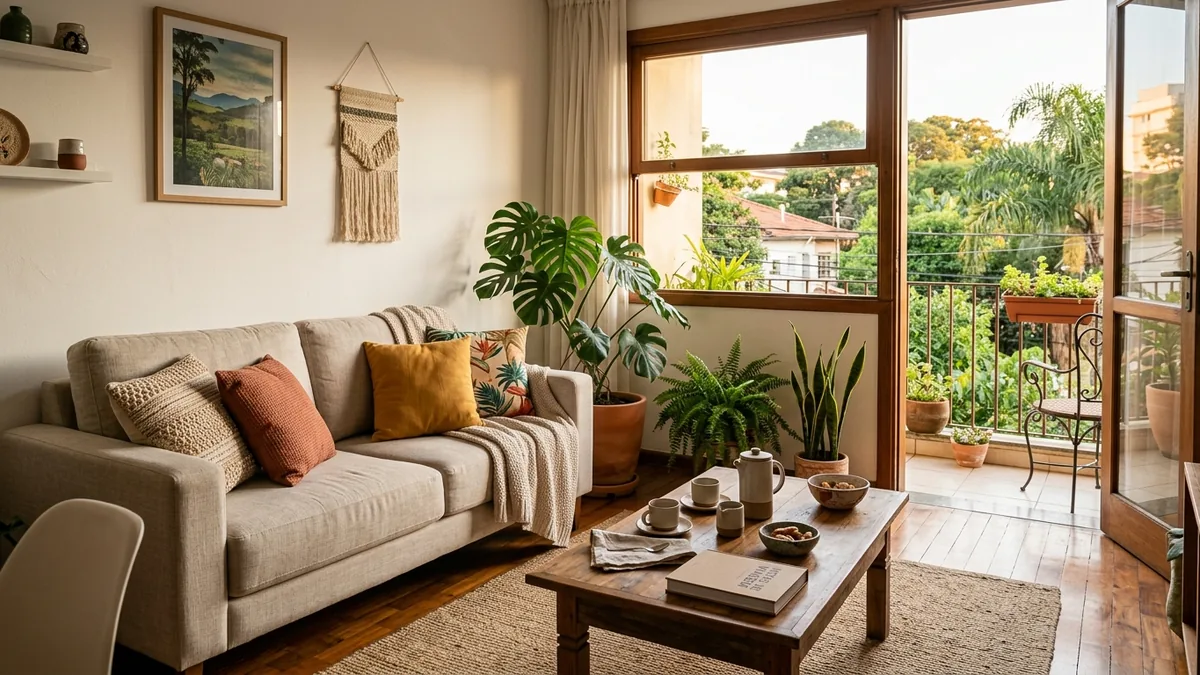
Part of the guide: Vacation Rental Host Guide: From Listing to Scale
You have an empty property, or a room nobody uses, and you keep thinking: "is it worth putting it up as a vacation rental?". This doubt is more common than it seems, and almost always comes with a certain fear of making mistakes. The good news is that starting a vacation rental is not rocket science. It is similar to learning to drive: in the first few weeks everything seems complicated, but with practice it becomes routine. Before deciding, it is worth running the property viability test to see if your market supports this type of rental.
This guide is for those who have never hosted and want an objective path to start a vacation rental, step by step, from the first question to the first booked night. It applies to any channel: most start with Airbnb, but the method is the same on Booking.com and direct bookings. No promises of easy money, because vacation rentals require work. The idea is to provide clarity on everything you need to decide and organize before hitting the "publish" button. This is the starting step-by-step guide; if you want the complete overview of the journey, from the decision to rent to scaling the operation, start with the complete host guide.
Main points
- Six steps separate the empty property from the first booking: goal, bureaucracy, preparation, photos, pricing, and communication.
- Start with the "why": the goal defines the channel, the price, the photo standard, and the time you invest.
- Choose where to list: Airbnb, Booking.com, or both; direct bookings need independently acquired demand and their own operating process.
- Resolve bureaucracy before listing: HOA rules and local tax/licensing requirements.
- Test an introductory price: protect your cost floor and review demand as genuine guest feedback arrives.
Step 1: where to start with a vacation rental?
The first step to starting a vacation rental is not creating the listing: it is answering why you want to rent it out. The answer changes the entire strategy, from the channel to the photo standard and the nightly rate.
There are very different goals, and none of them are wrong:
- Covering expenses of an empty property. A beach house you only use on holidays, for example. The goal is to pay HOA fees, property taxes, and maintenance without leaving the property idle all year.
- Generating extra income. Maybe you live in the property and have a spare room. It will not make you a millionaire, but it helps with monthly bills. In this case, see how to rent a room on Airbnb while living there.
- Truly investing in vacation rentals. Here you want to professionalize: optimize occupancy and rates, maybe have more than one property. It is a small business.
Each goal requires a different level of effort and investment. It is worth seeing this before spending the first booking revenue on the wrong linens:
| Goal | Listing and rate | Your time |
|---|---|---|
| Cover expenses | simple, conservative rate | low |
| Extra income | neat, average rate | medium |
| Professionalize | pro photos, active rate | high |
With a clear goal comes the first practical decision: where to list. Airbnb concentrates demand in many markets and is usually the best place to get the first booking. Booking.com carries more weight in destinations with a hotel profile and attracts an international audience. You do not have to choose just one: you can be on both and centralize the calendar to avoid double-booking the same date (see how in listing on Airbnb and Booking.com). Direct booking needs demand acquired independently of the platforms. Having reviews or a returning Airbnb guest does not create permission to encourage off-platform bookings; Airbnb's rules also cover future and repeat reservations. To start, choose one channel and focus on it; this guide works the same for any of them.
Defining the goal early avoids frustration. Those who enter thinking vacation rentals are "passive income" are usually disappointed. Active income is the most honest name: you adjust prices, answer messages, organize housekeeping, change linens, and solve unforeseen issues. In practice, a beginner host's time is usually divided like this:
The right goal guides every decision that follows: "covering expenses" tolerates a simple listing and conservative rates, while "professionalizing" justifies professional photos, better linens, and active pricing. There is no better or worse goal, there is what matches the time and money you have right now. If you are still deciding whether the effort pays off in the long run, it is worth reading first if you can make a living from Airbnb and calibrating your expectations. And if you do not even have the property yet, you can earn with Airbnb without buying property, as a co-host, managing the operation of someone else's house.
Get the next guides before anyone else
Practical Airbnb management and automation tips, no fluff. One email when new content drops. Unsubscribe anytime.
Step 2: do I need permission to start a vacation rental?
Before thinking about photos and listings, confirm if you can rent it out. There is no single universal license, but two points need to be resolved: the building rules (if applicable) and the legal/tax side. They apply to any platform, and even to direct bookings. It is a tedious step, but skipping it causes headaches later.
HOA and building rules
If the property is in a condominium or building with a Homeowners Association (HOA), read the bylaws and internal rules. The bylaws define what is and is not allowed in the building, and they have legal force. It is also worth understanding the rules for visitor access and the use of common areas, because this affects the guest experience.
The permissions, voting procedures and permitted uses depend on the jurisdiction, ownership documents and building rules. Do not apply a Brazilian court decision or approval threshold to another market. Verify the rules for this property with the relevant body and a local professional before spending on setup.
Documentation and taxes
Check local requirements for registration, licensing, income reporting and any other applicable taxes. Do not assume that a platform account replaces these obligations, that operating as an individual is permitted everywhere, or that a particular expense is deductible. The choice of business structure also depends on liability, ownership and local rules. Compare it with a qualified local adviser before deciding.
Compare the following questions for each operating structure; no row establishes a universal tax result:
| Criteria | Individual | Business Entity |
|---|---|---|
| Eligibility | Check whether individual hosting is permitted | Check registration and activity requirements |
| Reporting | Verify local personal reporting duties | Verify business reporting duties |
| Costs | Compare setup and ongoing costs | Compare setup, accounting and administration |
| Responsibility | Check liability and insurance | Check entity and operator responsibilities |
The local rules determine these answers; confirm them before choosing.
You do not need to resolve everything on the first day. You do need to be aware that the property is a business, with taxes and costs that are your responsibility. And here lies the difference that catches beginners by surprise the most: in vacation rentals, several bills run against you even when the property is empty.
Unlike traditional residential rentals, where the tenant assumes the utility bills, in vacation rentals all these costs run against the host, even on days without a booking. Treating this as an operating expense, and not as a detail, is what separates those who profit from those who only generate revenue.
Step 3: prepare the property with the guest in mind
Setting up a property for vacation rentals is different from furnishing your own home. A few principles save you trouble:
- Do not include expensive or sentimental items. That family painting or wedding china does not belong in a space that hosts different people every week. It is not that they will be stolen: accidents happen, and the wear and tear of something broken is not worth it.
- Think about durability and easy replacement. Linens, utensils, and furniture need to withstand heavy use and be easy to replace.
- Decide on the concept. Will you provide linens or not? In-person key handover or smart lock? Clean it yourself or hire a housekeeper? These choices define your operational cost and the standard of the listing. For a list of what is worth having, see the 5 essential items to set up your Airbnb.
When deciding on the concept, it helps to visualize the choices side by side:
| Decision | Budget option | Premium option |
|---|---|---|
| Linens | basic, easy replacement | better cotton, extra set |
| Entry | in-person key | smart lock |
| Housekeeping | yourself | housekeeper or company |
Also think about unforeseen scenarios: the television that stops working, the pipe that bursts, the air conditioning that breaks down. You do not need to fear this. You need to have a plan of who to call when it happens.
Step 4: do listing photos really make a difference?
They do, and more than any other element of the listing. On any vacation rental platform, photos are what define whether someone clicks or scrolls past: the guest decides in seconds, on the thumbnail, before reading a line of the description. The most common beginner mistake is the "real estate agent photo": quick, crooked, with bad lighting, just to have something on the listing.
The difference between a photo that sells and one that repels is usually in simple details:
| Aspect | Real estate photo | Photo that sells |
|---|---|---|
| Light | artificial, at night | natural, daytime |
| Space | messy, cluttered | tidy, clean |
| Angle | crooked, tight | wide, chest height |
| Cover | any room | the biggest highlight |
Why is the effort, or the investment in a professional, worth it? Because the photo does two things at the same time: it attracts the click and calibrates the expectations of those who arrive. Good photos justify the nightly rate and reduce the disappointment of "it looked better in the photo", which turns into a bad review and a refund request. Photography, in this sense, is not vanity: it is the first stage of your pricing and your reputation.
When photographing, a simple script already raises the level, even with a good smartphone:
- Natural light, during the day, with the windows open; turn on all lamps and avoid the flash.
- Tidy up first: bed made with linens, no luggage, chargers, or dishes in the sink.
- Shoot at furniture height (not standing) and from each corner to the opposite side, horizontally, which is how the search displays it.
- Show everything: all rooms, bathroom and kitchen included, with close-ups of appliances and the lock.
- The cover photo shows the most: choose the angle with the property's biggest highlight, because it is what decides the click.
The first five photos are the ones that appear most in the search, so put effort into them; if you can, a photographer specialized in vacation rentals usually pays for themselves quickly with a slightly higher nightly rate throughout the year. The Airbnb resource center provides examples of good photos.
Step 5: how to price the property's first nightly rate?
The safest way to define the first nightly rate is to research similar properties in the same area, with similar capacity and standard, and start slightly below the average until you accumulate reviews. It is worth comparing the price within each platform where you will list, because the Airbnb average and the Booking.com average do not always match. Before that, set up the listing properly: fill in all amenities (Wi-Fi, air conditioning, parking space, equipped kitchen), because guests filter by this, and write a clear and honest description. The Airbnb help center itself details how each field of the listing influences the search.
With the listing ready, look at the market average and follow three movements:
- Start slightly below it to win the first bookings and reviews.
- Raise it gradually as you accumulate good ratings and demand.
- Use different prices for weekdays, weekends, and high season.
Two numbers help you review the price. The cost floor must recover fixed costs over the nights you realistically expect to sell, plus variable costs, fees and applicable taxes. Dividing fixed costs by thirty is only a calendar-day allocation and assumes thirty sold nights if used as the recovery floor. The occupancy rate must be compared with local demand, booking lead time and net revenue; no single occupancy percentage diagnoses overpricing in every market. Adjust in small steps and measure the result.
Calculate your bottom line by the net rate, not the gross rate that appears on the listing. Net rate is what actually goes into your pocket after deducting the platform commission, the real cost of cleaning, and income taxes. In a hypothetical example using arbitrary monetary units (u.), a 200 u. nightly rate does not mean 200 u. of profit: take out the Airbnb commission, the cleaning cost, and the tax slice, and what is left is the number that actually pays your bills. It is common for beginners to celebrate full occupancy and, at the end of the month, discover that the margin was smaller than they imagined, because they reasoned by the storefront rate. Define your income goal based on the net amount, project a realistic occupancy for your region, and only then adjust the base price to get there.
In practice, this movement draws a curve. The rate starts below the market and rises as reviews come in:
Do not set the price out of pride ("my property is amazing, it is worth X"). Set it by what the market is willing to pay for what you actually offer. In the beginning, reviews are worth much more than a little extra income per night. A new listing has less guest feedback for travelers to assess. Search treatment varies by platform, so do not assume a universal ranking penalty. An introductory discount can help attract the first bookings if the cost floor holds. It does not buy a review or guarantee a higher later price; guest feedback must remain genuine and voluntary. That is why the sequence matters. First you use the price to build a reputation, and only then do you use the reputation to raise the price, without skipping steps. Inverting this order is the mistake that leaves a new listing stagnant for weeks.
The 5 mistakes that stall a new listing the most
Almost every listing that sits empty stumbles on the same five mistakes, and none of them are about the property itself (the expanded version, for the entire operation, is in the 5 mistakes that stall beginners on Airbnb):
- Leaving the listing and expecting magic, without mastering the fields, discounts, and rules of the chosen platform.
- Thinking you define the price: the guest prices it by comparing options.
- Unrealistic cleaning fee, which scares people away from a studio or does not cover the cost. (See how to calculate in housekeeping: to outsource or not.)
- Taking too long to reply, while the guest talks to several hosts at the same time.
- Not calibrating expectations, charging too much and reaping disappointment and low ratings.
Step 6: how does guest communication work day-to-day?
Communication is the part beginners underestimate the most, and it is constant. After the listing goes live, you start answering the same questions multiple times to different people: "is there parking?", "what time is check-in?", "how do I get in?", "is there a good restaurant nearby?".
Replying quickly directly influences conversion and reviews, because guests expect almost immediate answers, even late at night and on weekends. For those with a full-time job or family, this flow of messages becomes a real burden. It is the main reason why many people get discouraged before the operation takes off.
There is a relief in this: most of these questions are repetitive and can be standardized. Those who operate realize that the same ten doubts return all the time, which means you can organize and, to a large extent, automate communication without losing quality. You have three paths:
| Path | Your margin | Your effort |
|---|---|---|
| Manual self-management | preserved | high |
| Automated communication | almost intact | low |
| Professional co-host | reduced | minimal |
It is precisely in this routine that tools like Anfitrione automate WhatsApp communication. They answer repetitive questions instantly, send check-in instructions, and give local recommendations 24 hours a day. This leaves you free to take care only of what really requires your presence. The other option, outsourcing completely to a professional co-host, works, but reduces your margin.
Whichever path you choose, organize from the start:
- A reliable housekeeping process (trusted housekeeper or company).
- Message templates for the most frequent questions.
- Clear check-in and check-out instructions.
- A list of maintenance contacts for unforeseen events.
With these processes in place, what seemed to take all day starts consuming just a few hours a week.
Start small and adjust along the way
Do not wait to have everything perfect to start. Define your goal, choose the channel, resolve the building bureaucracy, prepare the property, take good photos, publish with an entry price, and adjust as the first guests arrive. Each booking teaches you something: about price, about what guests ask, about what to improve in the space.
If you need a map to stick on the wall, this is it:
| Step | What to decide | Why it matters |
|---|---|---|
| 1. Goal | why and on which channel | guides all decisions |
| 2. Bureaucracy | building and taxes | avoids fines and headaches |
| 3. Preparation | linens and concept | defines cost and standard |
| 4. Photos | cover and natural light | decide the click |
| 5. Price | entry rate | buys the first ratings |
| 6. Communication | process and automation | sustains reputation |
Vacation rentals are work, yes, but it is work that can be organized and, to a large extent, automated. The more you systematize the operation, especially communication, the more free time you have left to enjoy the best of the business: the income and the good stories with those who stay in your home. This was the starting step-by-step guide; when the property is already running and you want the complete overview of the operation, from the turnover between guests to scaling to multiple properties, follow the complete host guide.
Frequently asked questions
Which platform should I use to list my vacation rental?
For most beginners, Airbnb concentrates the demand and is the best place for the first booking. Booking.com works well in destinations with a more hotel-like profile and attracts an international audience, and it is worth listing on both as you build a routine. Direct bookings require independently acquired demand and a payment and support process; platform-originated guests remain subject to the channel's off-platform rules.
Do I need HOA or building approval to start a vacation rental?
It depends on the property, jurisdiction, lease and building rules. Check whether short-term stays are permitted and what authorizations or registrations apply before spending on setup. Do not assume that silence in the bylaws means permission, or that one country's approval procedure applies to another.
How much should I charge for my property's first nightly rate?
Research similar properties in the same area, with the same capacity and standard. For the first guests, start slightly below the average and adjust as you get reviews and demand. Use different prices for weekdays, weekends, and high season.
Is it better to manage the property alone or hire someone?
Both paths work. Self-management gives you more control and margin, but requires time for messages, housekeeping, and maintenance. If you are short on time, tools that automate communication or a professional co-host help maintain quality without it becoming a full-time job.
Do I need a registered business to host a vacation rental?
There is no universal answer across jurisdictions. Check eligibility to operate as an individual or business, licensing, tax registration, insurance and the permissions attached to the property. Ask the relevant local authorities and a qualified adviser before choosing a structure; portfolio size alone does not decide it.
Tired of answering the same questions on WhatsApp?
Anfitrione answers your guests around the clock, in your own tone of voice: check-in, Wi-Fi, local recommendations. You get the hours back, and no booking is lost to a slow reply.
Keep reading
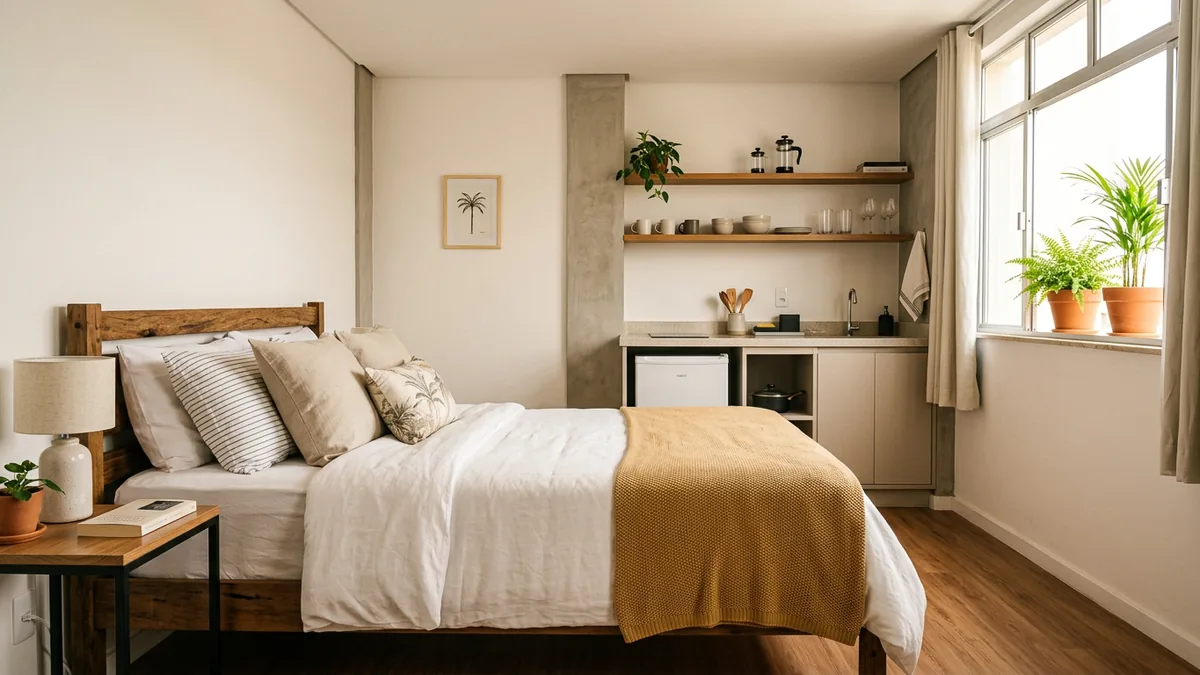
5 Beginner Airbnb Host Mistakes and How to Avoid Them
Almost every new host stumbles over the same five mistakes. Here is what they are, why they stall your rental and how to avoid each one before your first booking.

Vacation Rental Host Guide: From Listing to Scale
The complete roadmap to becoming a vacation rental host: from an empty property to a professional multi-channel operation, focusing on management and scale.

Furnishing a vacation rental: buy new or secondhand?
Almost no one picks a side. Here is what 41 hosts said about new and secondhand furniture, plus three tests that show when saving money makes sense.
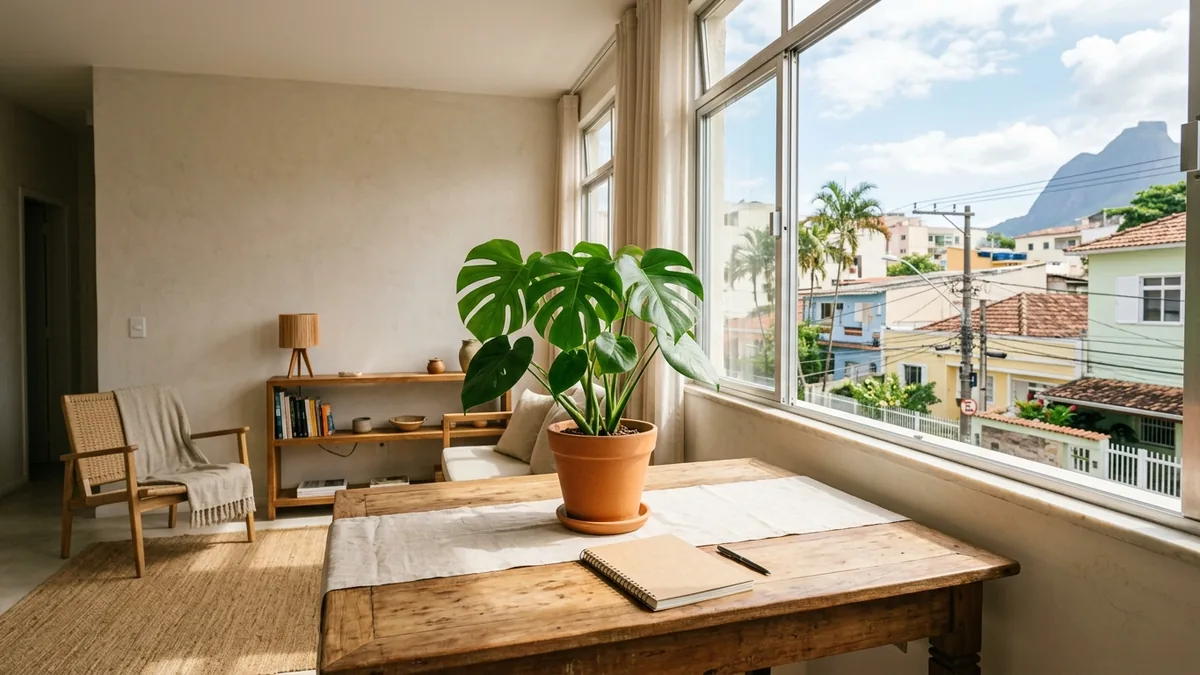
Vacation Rental Viability: Will Your Property Work?
Listing first and discovering later that the area lacks demand is an expensive mistake. Learn how to run a go or no-go test before publishing.
Get new guides by email
Practical Airbnb management and automation tips, no fluff. One email when new content drops. Unsubscribe anytime.