Airbnb linens and towels: how much to stock and what to buy
Airbnb linens and towels guide: how many sets per bed (the rule of three), white or colored sheets, the right thread count and how to replace them for less.
By Anfitrione Team

Part of the guide: How to manage an Airbnb remotely without living nearby
Airbnb linens are the bedding and bath set you hand to the guest ready to use. The math works best with a simple rule: three complete sets per bed, fabric with good value for money (around 180 thread count) and white when it is time to scale. Linens are not decoration. They are operations. They go unnoticed when they are spotless and turn into a low rating when a pillowcase is stained or a towel feels rough.
This guide is for anyone setting up a first property and for anyone already running several who wants to stop bleeding money on replacements. The guest lying in the bed has no idea which channel they booked through. You will see how much to buy, which fabric lasts longer, when white beats color and how to deal with stains and missing pieces without losing sleep. All of it with operator numbers, not shop window adjectives.
Key takeaways
- The rule of three sets the baseline: three complete sets per bed (one on the bed, one in the wash, one in reserve).
- Budget and mid-range hotels commonly use a 180 thread count percale blend of cotton and polyester, not the 800 thread count sheet.
- White scales better: it standardizes washing, reads as clean and comes back white after bleaching.
- One bath towel and one hand towel per guest cover a short stay; double them for long ones.
- Stains are a predictable cost: set aside a monthly reserve and go to AirCover only for a large loss.
What goes into the linen set of a short-term rental?
A short-term rental linen set is the bedding, bath linen and extras that leave the property ready for the guest to sleep and shower without bringing anything from home. It is not just sheets. It is a system of several pieces that must exist in enough quantity to rotate between one booking and the next.
On the bed, you need a fitted sheet, a flat sheet, pillowcases and a warm layer: a duvet or a blanket, depending on the climate. In the bathroom, there is the bath towel, the hand towel and the bath mat, the one that sits on the floor when you step out of the shower. Add the protectors, which nobody sees but which save the expensive item underneath.
The table below organizes the linens by room. Use it as an initial shopping list, keeping in mind that every bedding item is multiplied by the rule of three that comes next.
| Room | Linen items | Base quantity |
|---|---|---|
| Double bed | sheets, pillowcases, duvet or blanket | 3 sets per bed |
| Single bed | sheets, pillowcase | 3 sets per bed |
| Bathroom | bath towel, hand towel and bath mat | per guest and bathroom |
| Extras | mattress and pillow protectors | 1 per item, always |
The protectors deserve a highlight. A waterproof mattress protector and a pillow protector are the cheap insurance policy for your bedding. For less than the cost of a single mattress, they hold back liquid, sweat and the wear that would shorten the life of what sits beneath them.
How many Airbnb linens do you need (the rule of three)?
You need three complete sets per bed. The rule of three is the practice of keeping three sets of linens per bed rotating at the same time. One is in use on the guest's bed, the second is in the laundry, and the third stays clean and in reserve in the closet. That way, when a guest leaves, you swap in the reserve set right away, without depending on the wash having dried. With only two sets, a same-day turnover becomes a bet: if the laundry runs late, you are left without a bed ready. The third set is the safety margin that takes the risk out of the equation. Hosts with a one-night minimum feel this sooner, because turnover is high and the time to wash, dry, iron and fold is unforgiving.
The number goes up with the scenario. With simultaneous bookings across several properties, a calendar fed by more than one channel (Airbnb, Booking.com, direct bookings), high season or same-day check-outs, four to six sets per bed avoid the bottleneck.
Get the next guides before anyone else
Practical Airbnb management and automation tips, no fluff. One email when new content drops. Unsubscribe anytime.
Towels follow a similar logic, but per person. The standard is one bath towel and one hand towel per guest, plus one bath mat per bathroom. For stays longer than two nights, leave double or offer the washing machine. And stock linens for every bed the listing promises: whoever books a two-bedroom place expects both beds made, even if they come alone.
| Item | Short stay | Long stay |
|---|---|---|
| Bath towel | 1 per guest | 2 per guest |
| Hand towel | 1 per guest | 2 per guest |
| Bath mat | 1 per bathroom | 2 per bathroom |
| Bedding sets | 3 per bed | 3 per bed |
One operational detail that saves headaches: do not leave all the spare bedding in plain sight. A piece on display is a piece that gets used, and you can end the stay with a pile of dirty towels for no reason. Keep the spares in a closed cupboard and tell guests where they are, in case more people show up than booked.
Which linens to buy: thread count, GSM or the 800 thread myth?
Buy by cost per use, not by the label. Thread count is the number of threads per square inch of fabric, and it has a counterintuitive side: the more threads, the finer each thread, the softer the feel and the less the sheet stands up to laundering. In other words, the premium 400 or 800 thread count sheet delivers a better night, but it wears out sooner and is expensive to replace.
For commercial turnover, budget and mid-range hotel linen commonly relies on 180 thread count percale, almost always in a cotton and polyester blend. The cotton gives the cool, soft touch; the polyester takes the beating of the wash without fraying. The most common blends are 50/50, 60/40 and 70/30. Buying an 800 thread count Egyptian cotton sheet for an Airbnb is usually money thrown away: guests rarely value it, and you suffer the day it gets stained with hair dye.
The fabric blend is what balances comfort and lifespan. 100% cotton has the best feel, but it wrinkles more, pills over time and takes longer to dry, because it holds water. That is why hotels prefer a blend: a bit of polyester holds the fiber together and speeds up the laundry.
For towels, the number that matters is GSM. GSM (grams per square meter) is the weight of the towel fabric, and it defines how plush and absorbent the towel is. Below 350 GSM, a towel dries poorly and disappoints. Between 400 and 500 GSM sits the best value for lodging. Above that, in the 600 to 1000 GSM range, you enter premium experience territory, which only pays off if the nightly rate supports it. The table sums up where each thread count range fits.
| Thread count | Property profile | Durability |
|---|---|---|
| Below 150 | avoid, rough feel | low |
| 150 to 180 | first property and scaling up | high |
| 200 | extra comfort | medium |
| 400 or more | premium experience | lower |
White or colored linens: which works better in operations?
It depends on scale, but when in doubt white wins. For one or two properties, color is welcome: it gives personality, matches the decor and reminds the guest they are in a home, not a hotel. From four or five properties on, operations push you toward white for three concrete reasons. First, standardization: you wash everything together, without sorting colors, with no risk of one piece dyeing another. Second, recovery: you bleach white and it comes back white, while colored linen fades with use and would need re-dyeing, an expensive process a small host has no way to do. Third, replacement: you can find a white towel anywhere; matching the exact shade of a beige that went missing is close to impossible. White also reads as clean, which weighs on how guests perceive the place.
None of this forces anyone to become a hotel. In practice, operators find they can have both: an all-white bed, easier to sanitize, with a colored microfiber throw on top. Microfiber holds color much better than a blended sheet, so the charm sits on the piece that fades less.
| Criterion | White | Colored |
|---|---|---|
| Perceived cleanliness | strong | medium |
| Standardizing laundry | easy | laborious |
| Recovering from stains | bleach and it's back | tends to fade |
| Replacing a piece | found everywhere | hard to match the shade |
There is also a regional factor. On the coast, brackish water tends to yellow white linen over time, and some operators go for natural off-white tones or dark makeup towels, which hide lipstick stains more easily. It is the exception that proves the rule: choose the color for the laundry, not just for the photo.
Stained or missing: how to replace without losing money with AirCover?
Treat stains as a predictable cost, not as an insult. At the volume of an operation with steady turnover, a small share of bookings will leave some piece stained or damaged, and fighting over each one costs more in stress and reputation than in money. The mature approach is to set aside a monthly replacement reserve and decide case by case. For a cheap pillowcase you buy in bulk, absorb the loss and move on: a few dollars are not worth risking a bad review. For a real loss, with several pieces or an expensive item ruined, charge.
Airbnb lets you request payment for the damage from the guest through the Resolution Center and, if they do not pay, escalate to AirCover for Hosts. The deadline matters: report the damage within 14 days of check-out. The damage claim rules are in the Help Center and change from time to time, so check the current version before opening the request.
Knowing what ruins linens most helps prevent it. Sunscreen is often named the biggest culprit on the coast, because it leaves a greasy stain that is hard to remove. Makeup, lipstick, hair dye and blood come right after, and normal wear closes the list.
Buying cheap, here, is strategy and not stinginess. The detail that lets you sleep at night is this. With a cheap 180 thread count sheet, a stain is an annoyance; with an 800 thread count sheet that cost a fortune, it is a loss that keeps you up. When wear arrives, the piece can be reused: a king sheet stained at one end becomes a single, and an old towel becomes a cleaning rag.
How to wash and care for linens so they last longer?
The laundry decides half of your linens' lifespan. Before first use, professional linen needs to be de-sized: it comes with a factory finish that leaves the fabric stiff, and only after three to five washes does the cotton release its real softness. Putting it straight on the bed delivers a rough sheet that yellows with sweat.
Day to day, a few habits stretch durability. Avoid chlorine bleach, which eats away at the fiber, especially used undiluted; choose chlorine-free products. Do not overdo the detergent, because residue stiffens the piece, and skip fabric softener, which coats the fiber and leaves a smell. A tumble dryer, keeping the towel in motion, leaves the pile much softer than a clothesline. And strong sun, on a blended fabric or over sweat residue, tends to yellow rather than whiten: when in doubt, dry in the shade.
| Step | Good practice | Common mistake |
|---|---|---|
| Before first use | de-size over 3 to 5 washes | using it straight from the pack |
| Bleaching white | chlorine-free product | undiluted chlorine bleach |
| Drying towels | tumble dryer keeps them soft | strong sun on blended fabric |
| Duvet | wash only the cover | washing the whole duvet every time |
The duvet deserves a tactic of its own. A duvet cover is a kind of giant pillowcase that wraps the duvet, and the trick is to wash only the cover, not the whole piece. A cover weighs about 800 grams, against two to three kilograms for the duvet, so washing the cover is faster, cheaper and causes less wear. That is why hotels almost never change the duvet at every stay: they change the cover. For the turnaround between check-out and check-in, that logistics gap is huge, and it ties directly into the decision of whether or not to outsource cleaning.
Where automation takes linens off your mind
A good part of the work with bedding is not washing: it is answering. The guest who booked for four people in a studio for two asks where the extra set is. The long-stay guest wants to know how to use the washing machine. The one who arrived in the middle of the night looks for the spare towel. Same questions, every week, always at odd hours.
This is where guest messaging automation comes in without becoming another spreadsheet. Anfitrione answers these repeated questions on WhatsApp, right away, with the instructions for where the extra linens are and how the property's laundry works. You keep operations organized and stop repeating where the towel cupboard is for every booking. The pieces are still yours, but they stop taking up space in your head.
Where to go from here
Well-sorted bedding looks like this: three sets per bed, a blended fabric around 180 thread count, white to scale and a monthly fund for the stains that will come. Start with quantity, because that is what jams operations, and refine the fabric as you learn who your guests are. None of this changes with the channel: linens belong to the house, not to the listing. Linens are one piece of the puzzle. If your listing is live but bookings are slow, check why your Airbnb listing is not showing in search.
Frequently asked questions
How many sets of linens do I need per bed?
The usual recommendation is three complete sets per bed, the so-called rule of three: one on the bed, one in the laundry and one in reserve. With same-day turnovers, high season or simultaneous bookings, go up to four to six sets per bed so you are never caught short.
What thread count should Airbnb sheets have?
Stay at 150 threads at the very least and, ideally, with a 180 thread count percale blend, common in budget and mid-range hotel linen. Above 200 threads the feel improves, but durability drops and replacement costs more. For high turnover, cost per use beats luxury.
White or colored linens: which should I choose?
For one or two properties, color adds charm and causes no trouble. As you scale, white wins: it standardizes washing, reads as clean and comes back white after bleaching. Colored linen fades and it is hard to match the shade when you replace a single piece.
Am I required to provide linens on Airbnb?
No. No platform requires it. In a city property, not providing them costs bookings, because the competition does. In a beach house or a country house, where guests arrive by car and bring their own, many hosts skip them and the laundry math works out better.
How many towels should I leave per guest?
The standard is one bath towel and one hand towel per guest, plus one bath mat per bathroom. For stays longer than two nights, leave double or give access to the washing machine. Beach towels only make sense in a coastal property.
Can I charge a guest for stained linens?
Yes. Airbnb lets you request payment for the damage through the Resolution Center and, if the guest does not pay, escalate to AirCover. Use common sense: for a cheap pillowcase, many operators absorb the cost rather than risk the review. For a large loss, charge.
Tired of answering the same questions on WhatsApp?
Anfitrione answers your guests around the clock, in your own tone of voice: check-in, Wi-Fi, local recommendations. You get the hours back, and no booking is lost to a slow reply.
Keep reading
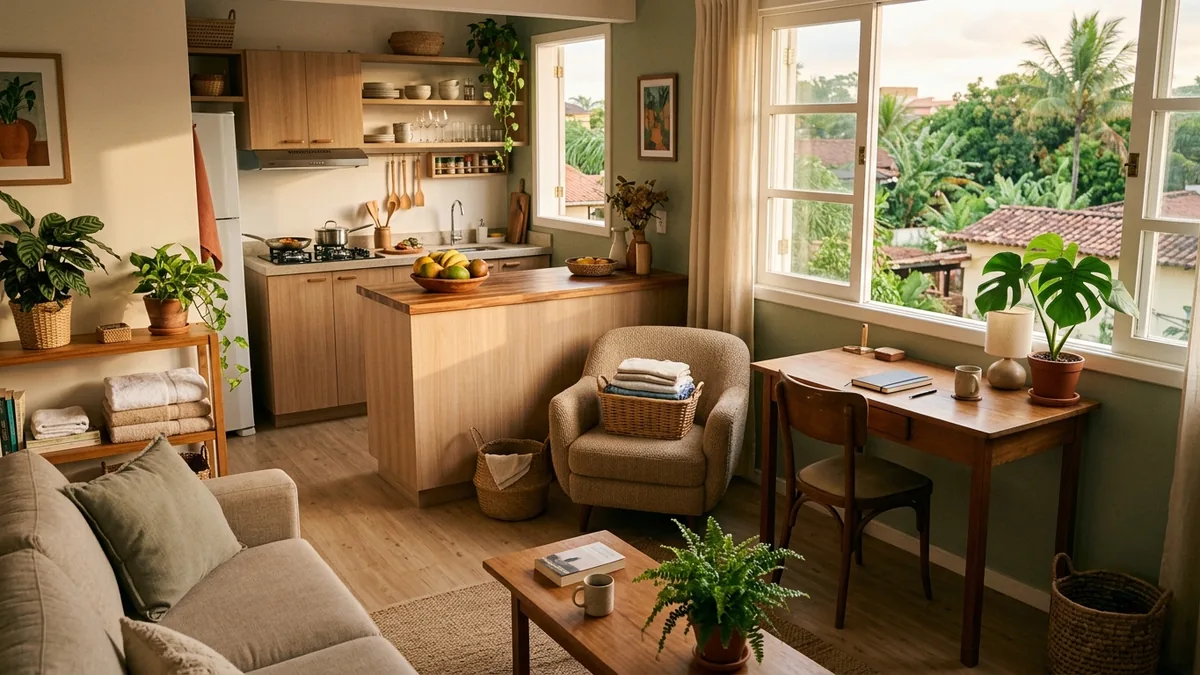
30-Day Airbnb Stays: What Changes for Hosts
A one-month booking fills the whole calendar and looks like the deal of the year. What it changes is not the price, but everything you never wrote down before accepting.
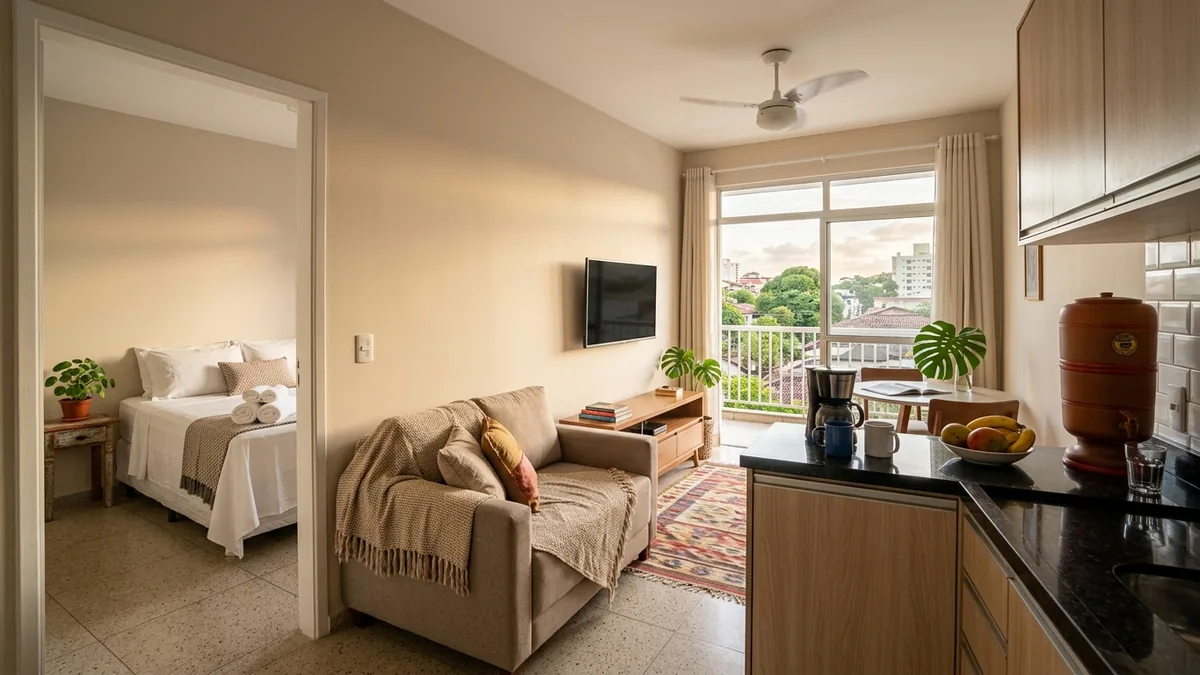
Furnishing an Airbnb: 5 Essentials and 3 Bonuses to Wow
Before buying pillows and silverware, secure these 5 essential items for your vacation rental. They show up in reviews and directly influence occupancy.

Airbnb camera rules: where hosts can install them
Airbnb generally bans indoor cameras, even switched off or in shared room-listing spaces. Exterior devices need disclosure; certain licensed properties in Japan have a narrow entryway exception.
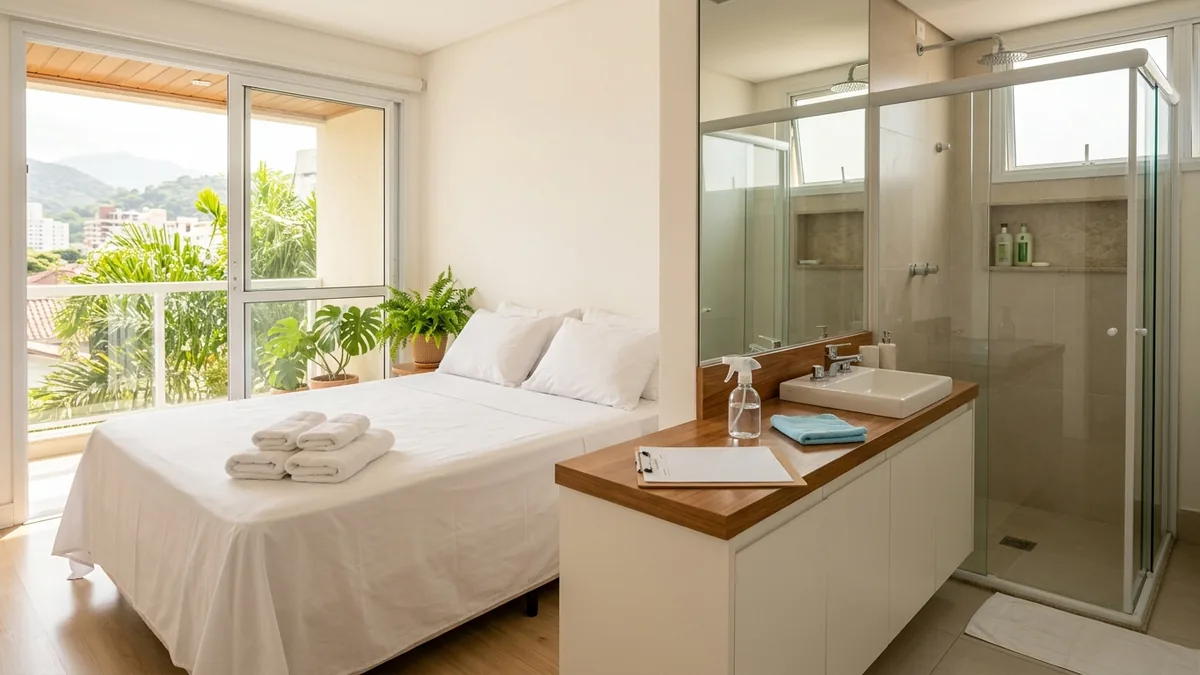
Airbnb cleaning checklist: a room-by-room guide
The list that fits the turnover window: seven rooms with clear completion standards, the photos that become proof, and the message housekeeping sends before leaving.
Get new guides by email
Practical Airbnb management and automation tips, no fluff. One email when new content drops. Unsubscribe anytime.